
Why the Most Expensive Mistakes Are Often Made Before Construction Even Begins
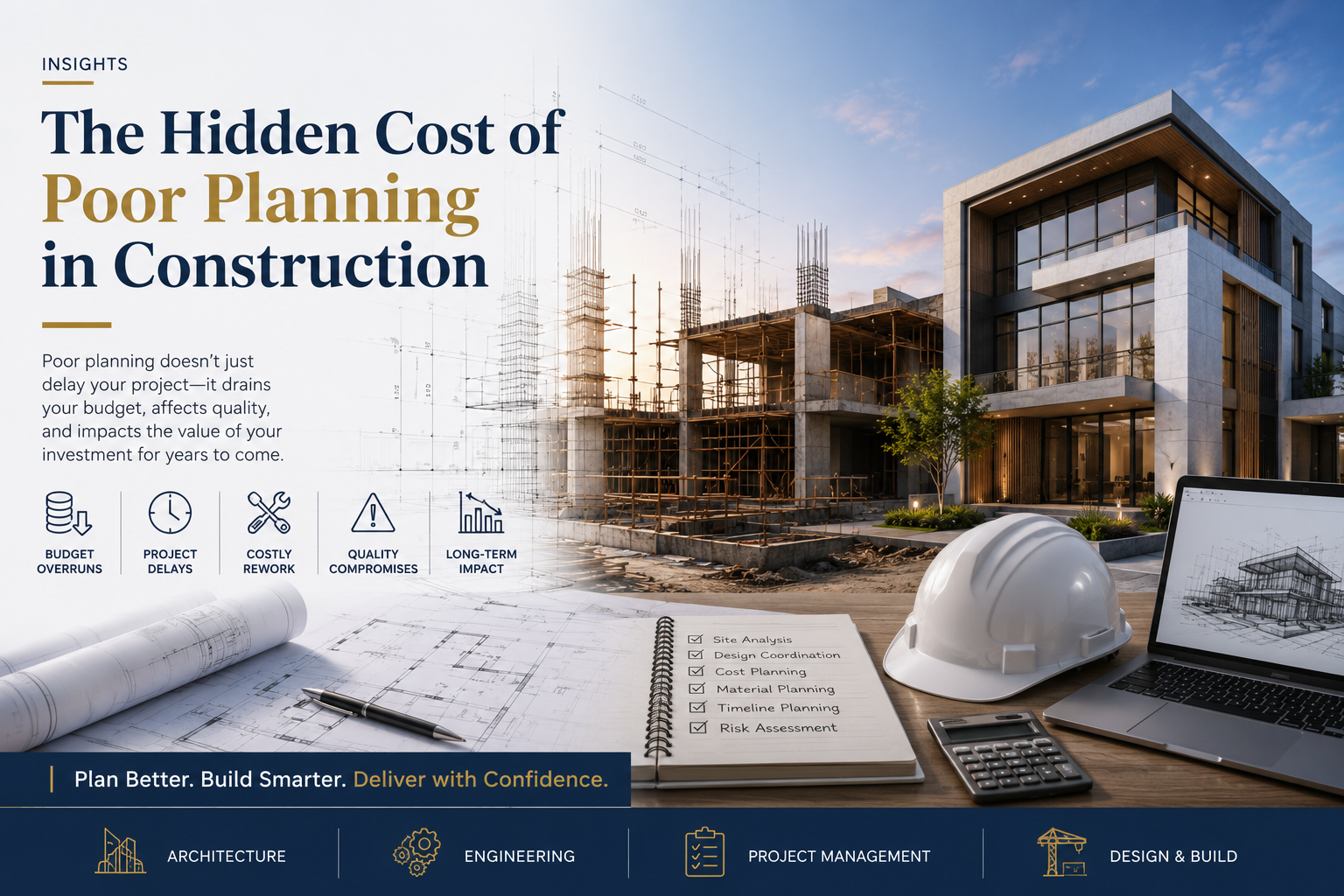
When people think about construction costs, they usually focus on cement, steel, labour, or finishing materials. These are the visible expenses that appear throughout a project. However, some of the most significant costs in construction are never listed on an invoice.
They come from poor planning.
A building rarely fails because of a lack of effort during construction. More often, projects become expensive because important decisions were delayed, overlooked, or made without proper coordination.
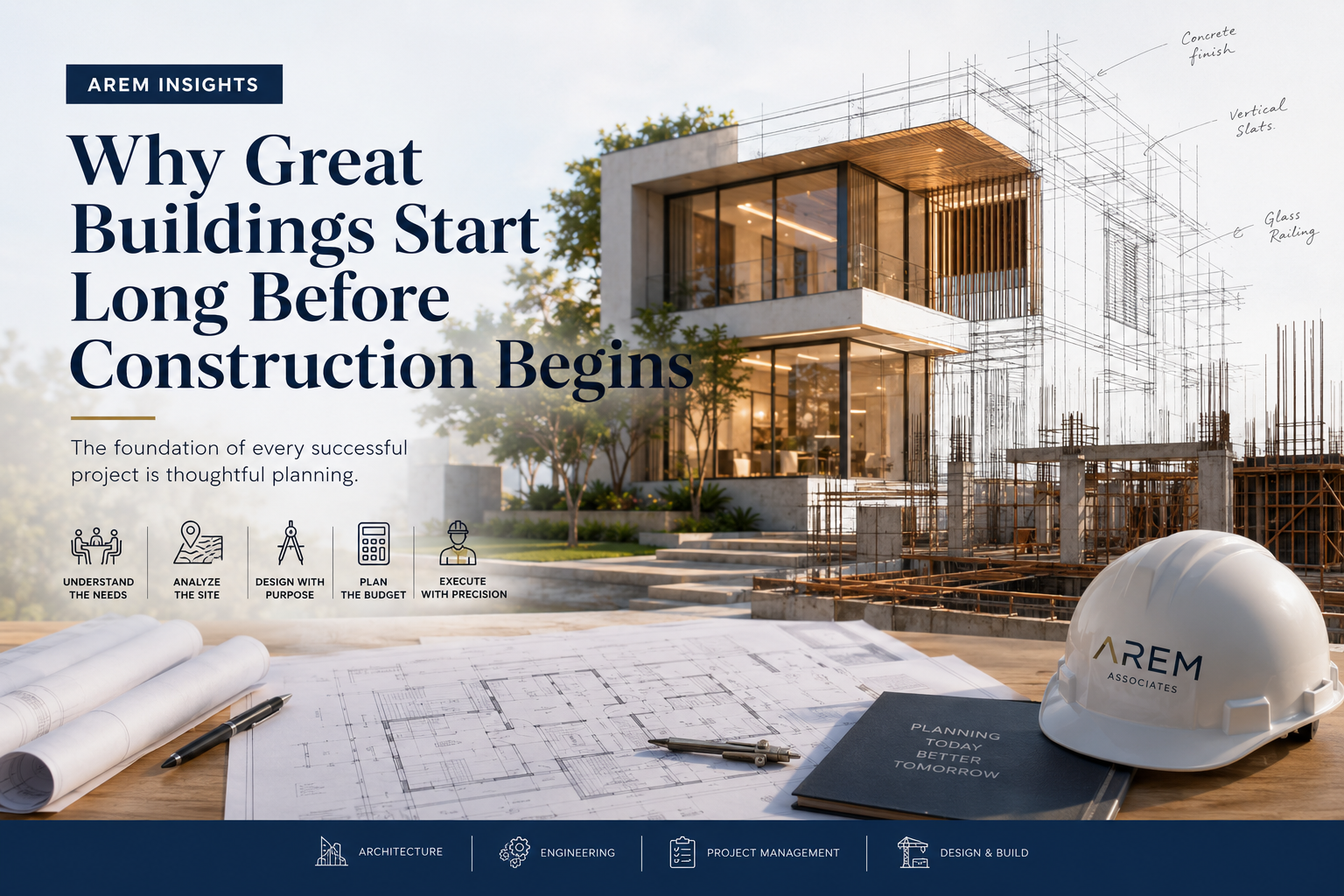
At AREM, we believe that careful planning is not an optional stage—it is the foundation of every successful project. The time invested in planning before construction begins often determines the quality, efficiency, and long-term value of the finished building.
Construction Mistakes Often Begin on Paper
Every line on a drawing influences work on the construction site.
A missing dimension, an uncoordinated structural detail, or an incomplete service layout may seem insignificant during design, but these small issues can become major challenges once construction has started.
When problems are discovered on-site, they usually require:
- Redesign
- Rework
- Additional labour
- Material replacement
- Delays in execution
Planning eliminates uncertainty before it reaches the construction site.
Design Changes Become Increasingly Expensive
Making adjustments during the design phase is relatively simple.
Making the same changes after foundations are completed is an entirely different situation.
Late design revisions often result in:
- Demolition of completed work
- Additional material procurement
- Contractor downtime
- Extended project duration
- Increased labour costs
The later a decision is made, the more expensive it becomes.
Good planning allows important decisions to be made when they are least costly to implement.
Poor Coordination Creates Hidden Costs
Modern buildings rely on multiple disciplines working together.
Architecture, structural engineering, electrical systems, plumbing, drainage, HVAC, and fire safety all occupy the same physical space.
Without proper coordination, conflicts become unavoidable.
Examples include:
- Structural beams interfering with service ducts
- Plumbing lines crossing electrical systems
- Insufficient ceiling space for mechanical services
- Inaccessible maintenance areas
Resolving these conflicts during construction consumes both time and budget.
Integrated planning prevents many of these issues before construction begins.
Budget Overruns Often Begin with Unrealistic Expectations
Every project starts with financial goals.
However, when the design evolves without considering construction costs, budgets can quickly become unrealistic.
Unexpected expenses frequently arise from:
- Material substitutions
- Incomplete quantity estimation
- Design revisions
- Scope expansion
- Procurement delays
Cost planning should evolve alongside the design process.
When financial decisions are made early, clients gain greater control over their investment.
Time Delays Affect More Than Construction
Project delays rarely impact only the construction schedule.
They influence:
- Rental income
- Business operations
- Loan repayments
- Material prices
- Labour availability
- Occupancy dates
In many cases, the indirect financial impact of delays exceeds the direct construction costs.
A realistic programme supported by proper planning significantly reduces these risks.
Functional Mistakes Last for Decades
Some planning mistakes cannot easily be corrected after completion.
Examples include:
- Poor room orientation
- Inadequate natural lighting
- Inefficient circulation
- Limited storage
- Poor ventilation
- Insufficient parking
- Difficult future expansion
Unlike finishes or furniture, these issues become permanent characteristics of the building.
Good planning protects long-term functionality.
Quality Cannot Be Added Later
Many people believe quality depends only on premium materials.
In reality, quality begins with good decisions.
A carefully planned project allows contractors to execute work with greater accuracy, consistency, and efficiency.
Without clear documentation and coordination, even highly skilled construction teams face unnecessary challenges.
Planning creates the conditions for quality construction.
Maintenance Costs Begin During Design
The true cost of a building extends far beyond construction.
Every design decision influences future maintenance.
Questions worth asking include:
- Can services be accessed for maintenance?
- Are materials suitable for the local climate?
- Will finishes remain durable over time?
- Can building systems be maintained without disruption?
Buildings designed with long-term performance in mind continue to provide value for decades.
Planning Supports Sustainability
Sustainability is not achieved by adding technology at the end of a project.
It begins with thoughtful planning.
Building orientation, daylight, natural ventilation, shading, water management, and material selection all contribute to long-term environmental performance.
Good planning reduces operational costs while improving occupant comfort.
The most sustainable buildings are often those that make the smartest decisions from the very beginning.
Communication Is One of the Most Valuable Planning Tools
Construction is a collaborative process.
Clients, architects, engineers, consultants, contractors, and suppliers all contribute to the final outcome.
When communication is clear, decisions are made efficiently and expectations remain aligned.
When communication breaks down, misunderstandings become expensive.
Successful projects are built on transparency, coordination, and shared objectives.
Planning Is Not About Slowing Down
Some believe that spending additional time on planning delays construction.
The opposite is often true.
Well-planned projects move through construction with greater confidence because major decisions have already been resolved.
Planning does not slow progress.
It prevents interruptions.
The AREM Perspective
At AREM, we approach every project with one guiding principle:
The quality of construction depends on the quality of planning.
Before construction begins, we focus on understanding the client’s vision, analysing the site, coordinating technical disciplines, managing budgets, and developing practical solutions that support efficient execution.
Our objective is not simply to complete projects.
It is to deliver buildings that continue to perform, adapt, and create value for years to come.
Final Thoughts
Construction is one of the most significant investments most people will ever make.
While materials, labour, and equipment are visible costs, the hidden costs of poor planning often have the greatest impact on a project’s success.
Thoughtful planning reduces uncertainty, improves quality, protects budgets, and creates buildings that remain functional throughout their lifecycle.
Because in construction, the most valuable investment is not always made on-site.
It is made before construction begins.