
Construction Planning : The Blueprint for Project Success
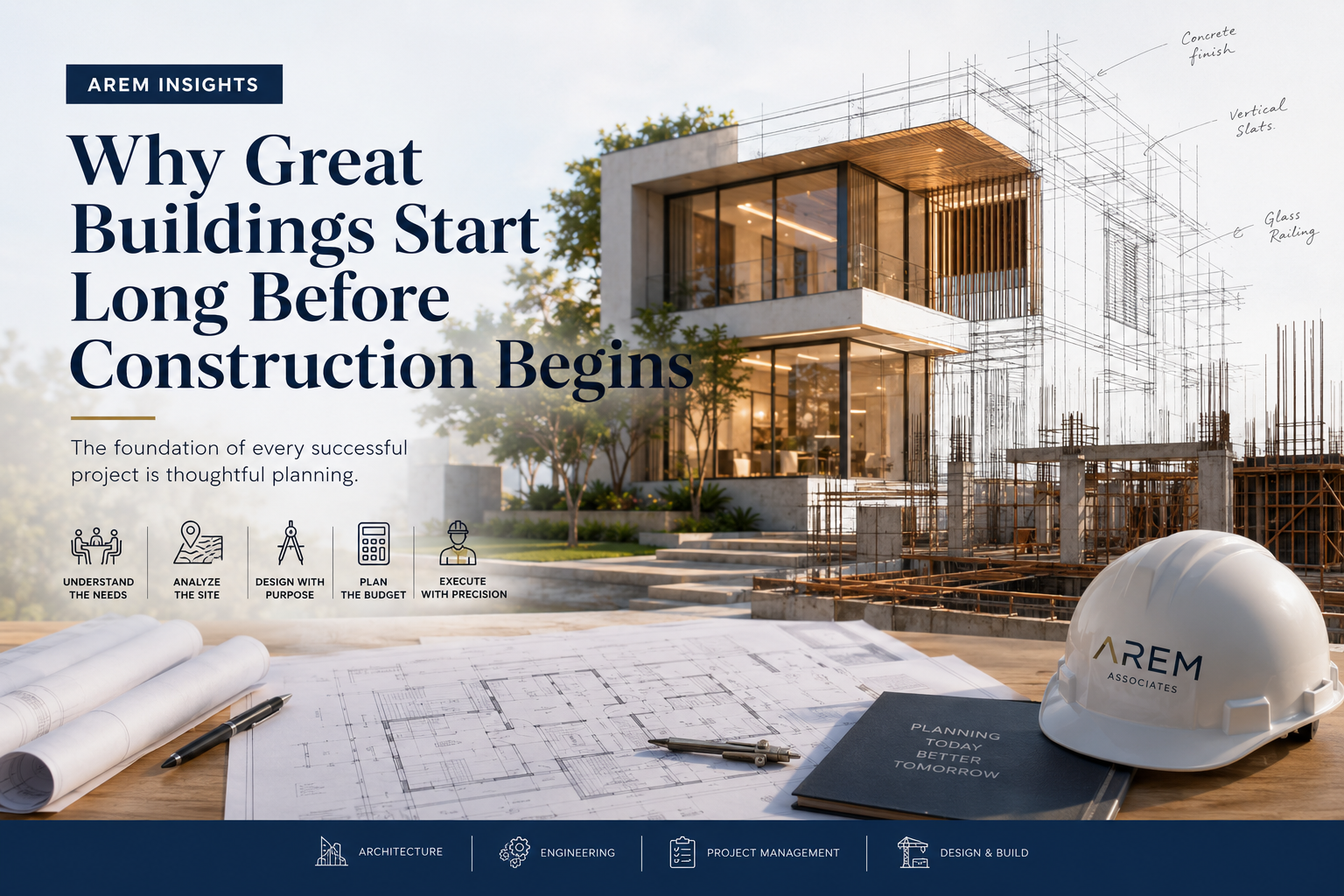
Every successful construction project begins long before excavation starts or concrete is poured. Behind every well-built home, commercial building, industrial facility, or infrastructure project lies a carefully developed construction plan.
Construction planning is the process of organizing every aspect of a project—from design coordination and budgeting to scheduling, procurement, quality control, and risk management. A comprehensive plan provides the roadmap that guides a project from concept to completion while helping to reduce delays, control costs, and maintain quality.
Whether you are building your dream home or developing a large commercial project, investing in proper construction planning is one of the smartest decisions you can make.
What is Construction Planning?
Construction planning is the strategic process of defining project objectives, identifying resources, preparing schedules, estimating costs, assessing risks, and coordinating all stakeholders before construction begins.
It connects the client’s vision with practical execution, ensuring that architects, engineers, contractors, suppliers, and project managers work toward the same objectives.
A well-planned project answers important questions before work starts:
- What needs to be built?
- How much will it cost?
- How long will it take?
- Which resources are required?
- What risks could affect the project?
- How can delays and cost overruns be prevented?
Why Construction Planning is Essential
1. Better Cost Control
One of the primary causes of budget overruns is inadequate planning. Detailed quantity estimation, Bills of Quantities (BOQ), material analysis, and realistic budgeting help clients understand project costs before construction starts.
Proper planning minimizes unexpected expenses and supports informed financial decisions throughout the project.
2. Efficient Project Scheduling
A realistic construction schedule breaks the project into manageable phases, including:
- Site preparation
- Foundation
- Structural work
- Masonry
- Roofing
- MEP installation
- Interior finishes
- External development
- Final inspection and handover
Careful sequencing reduces downtime, improves productivity, and helps projects finish on schedule.
3. Improved Design Coordination
Many construction delays result from conflicts between architectural, structural, and MEP drawings.
Early coordination allows design teams to identify clashes before construction begins, reducing costly modifications during execution.
Integrated planning leads to smoother workflows and fewer disruptions on site.
4. Effective Risk Management
Every construction project faces uncertainties, including:
- Material price fluctuations
- Labour shortages
- Weather conditions
- Regulatory approvals
- Design revisions
- Supply chain delays
Construction planning identifies these risks early and develops mitigation strategies to reduce their impact.
5. Higher Construction Quality
Quality is achieved through preparation, not inspection alone.
Construction planning establishes:
- Material specifications
- Quality control procedures
- Inspection schedules
- Testing requirements
- Work sequencing
- Compliance with applicable codes and standards
This proactive approach helps deliver durable, safe, and high-quality buildings.
Key Elements of Construction Planning
Site Analysis
A detailed site assessment evaluates soil conditions, topography, drainage, access roads, utilities, climate, and environmental constraints. Understanding these factors helps avoid technical challenges during construction.
Project Scope Definition
Clearly defining project requirements prevents misunderstandings and scope changes later in the project.
A comprehensive scope includes:
- Functional requirements
- Space planning
- Technical specifications
- Project objectives
- Client expectations
Cost Estimation and BOQ
Accurate quantity take-offs and cost estimation form the financial foundation of every project.
Professional estimation considers:
- Material quantities
- Labour costs
- Equipment
- Transportation
- Taxes
- Contingencies
This enables better budgeting and financial control.
Procurement Planning
Timely procurement ensures materials and equipment are available when needed.
Planning procurement reduces:
- Material shortages
- Delivery delays
- Price escalation
- Site interruptions
Resource Planning
Construction projects depend on efficient use of:
- Skilled manpower
- Construction equipment
- Machinery
- Building materials
- Specialist subcontractors
Proper resource allocation improves productivity while reducing waste.
Construction Scheduling
Scheduling establishes realistic timelines, identifies project milestones, and tracks critical activities throughout the construction process.
Modern scheduling tools help project teams monitor progress and respond quickly to changing site conditions.
Common Construction Planning Mistakes
Many projects encounter avoidable challenges because of inadequate planning.
Common mistakes include:
- Starting construction with incomplete drawings
- Unrealistic project schedules
- Poor communication between stakeholders
- Inaccurate cost estimation
- Weak procurement planning
- Insufficient site investigation
- Lack of risk assessment
- Frequent design changes during execution
Avoiding these mistakes can significantly improve project performance.
How Technology is Transforming Construction Planning
Today’s construction industry benefits from advanced digital technologies that improve planning accuracy and collaboration.
These include:
- Building Information Modelling (BIM)
- 3D Visualization
- Drone Surveys
- Digital Project Management Platforms
- Cloud-Based Document Management
- Construction Scheduling Software
These tools enable better decision-making, reduce coordination errors, and improve overall project efficienc
Benefits of Professional Construction Planning
A professionally planned construction project offers significant advantages:
- Reduced project delays
- Better budget control
- Improved coordination
- Higher construction quality
- Lower project risks
- Efficient resource utilization
- Greater client satisfaction
- More predictable project outcomes
Construction planning is an investment that saves both time and money throughout the project lifecycle.
AREM Associates’ Approach to Construction Planning
At AREM Associates, we believe that exceptional buildings begin with exceptional planning.
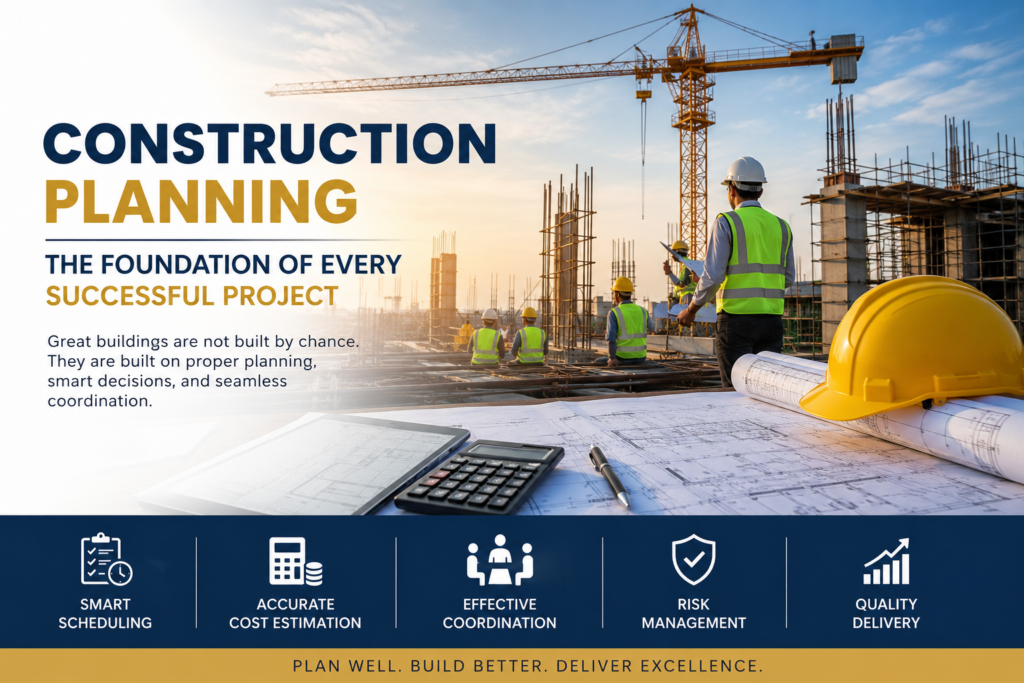
Our multidisciplinary approach combines architecture, engineering, project management, and practical construction experience to deliver projects that are efficient, functional, and buildable.
Our construction planning services include:
- Architectural Planning
- Design Coordination
- BOQ & Cost Estimation
- Construction Scheduling
- Project Management Consultancy (PMC)
- MEP Coordination
- Construction Supervision
- Quality Monitoring
- Risk Assessment
- Technical Documentation
By integrating planning with execution, we help clients achieve projects that are completed with greater confidence, transparency, and efficiency.
Conclusion
Construction planning is the foundation upon which successful projects are built. It transforms ideas into actionable strategies, aligns project teams, reduces uncertainty, and improves overall project performance.
Whether you are planning a residence, commercial development, institutional building, or infrastructure project, investing in professional construction planning can significantly improve cost efficiency, quality, and timely delivery.
At AREM Associates, we are committed to providing practical, innovative, and technically sound planning solutions that support successful project outcomes from concept to completion.
Frequently Asked Questions (FAQ)
Q1. What is construction planning?
Construction planning is the process of organising the scope, budget, schedule, resources, and execution strategy before construction begins.
Q2. Why is construction planning important?
It helps reduce delays, control costs, improve coordination, manage risks, and achieve better construction quality.
Q3. What is included in a construction plan?
A construction plan typically includes site analysis, design coordination, cost estimation, project scheduling, procurement planning, resource allocation, quality management, and risk assessment.
Q4. Can construction planning reduce project costs?
Yes. Careful planning minimises material waste, avoids unnecessary rework, improves scheduling, and supports more accurate budgeting.
Q5. Does AREM Associates provide construction planning services?
Yes. AREM Associates offers integrated construction planning, architectural design, engineering coordination, project management consultancy, BOQ preparation, and construction supervision for residential, commercial, institutional, and infrastructure projects.