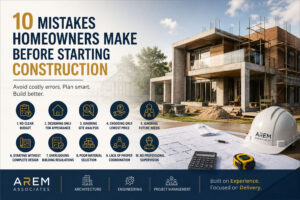

10 Mistakes Homeowners Make Before Starting Construction
Building your dream home is one of the most significant investments you’ll ever make. It’s an exciting journey, but it’s also filled with decisions that can impact your budget, timeline, and the quality of your finished home.
Many construction challenges don’t begin on-site—they begin before construction even starts. Avoiding common mistakes during the planning stage can save you considerable time, money, and stress.
Here are ten mistakes homeowners frequently make before starting construction and how you can avoid them.
1. Starting Without a Clear Budget
One of the biggest mistakes is beginning a project without defining a realistic budget. Homeowners often focus only on construction costs while overlooking expenses such as architectural design, structural engineering, approvals, utility connections, interiors, landscaping, and contingency funds.
Tip: Prepare a comprehensive project budget and keep a contingency reserve of around 5–10% for unforeseen expenses.
2. Choosing a Design Based Only on Appearance
A beautiful elevation may look impressive, but good architecture is about much more than aesthetics. Your home should suit your family’s lifestyle, future needs, climate, and site conditions.
A well-designed home balances:
- Functionality
- Natural lighting
- Ventilation
- Privacy
- Energy efficiency
- Ease of maintenance
Remember, your home should work well every day—not just look good in photographs.
3. Skipping Site Analysis
Every plot is unique. Ignoring factors such as soil conditions, slope, drainage, access roads, sunlight, prevailing winds, and surrounding developments can create costly problems later.
A detailed site assessment helps optimise the building layout and reduces construction risks.
4. Hiring Based Only on the Lowest Price
Selecting an architect or contractor solely because they offer the lowest quotation can lead to poor workmanship, delays, and additional expenses during construction.
Instead, evaluate:
- Experience
- Portfolio
- Technical capability
- Communication
- Quality standards
- Client references
Value and expertise often deliver better long-term results than the lowest initial cost.
5. Ignoring Future Requirements
Many homeowners design only for their current needs without considering how their lifestyle may change over time.
Think ahead:
- Will your family grow?
- Will elderly parents live with you?
- Do you need a home office?
- Is there provision for future expansion?
- Would you consider installing solar panels or electric vehicle charging?
Planning for the future today avoids expensive renovations tomorrow.
6. Starting Construction Before Completing the Design
Beginning construction while drawings are still changing is a common reason for delays and cost overruns.
Complete all major planning before construction starts, including:
- Architectural drawings
- Structural drawings
- Electrical layouts
- Plumbing layouts
- Elevation details
- Material specifications
A coordinated design reduces confusion on-site and minimises rework.
7. Overlooking Local Building Regulations
Every location has development regulations governing setbacks, height limits, floor area, parking, fire safety, and approvals.
Ignoring these requirements can result in:
- Construction delays
- Penalties
- Design modifications
- Approval issues
Always ensure your project complies with applicable local regulations before construction begins.
8. Selecting Materials Without Research
Building materials influence durability, maintenance, appearance, and long-term costs.
Rather than choosing materials based only on price or trends, consider:
- Quality
- Performance
- Availability
- Warranty
- Maintenance requirements
- Compatibility with your design
Investing in quality materials often reduces maintenance costs over the life of the building.
9. Underestimating the Importance of Project Coordination
Modern homes involve multiple professionals, including architects, structural engineers, electrical consultants, plumbing experts, interior designers, and contractors.
Poor coordination between these teams can lead to clashes, redesigns, and delays during construction.
Integrated planning ensures every discipline works together efficiently before work begins on site.
10. Not Appointing Professional Supervision
Many homeowners assume that once construction begins, everything will proceed smoothly.
In reality, regular supervision helps ensure:
- Work matches approved drawings
- Construction quality is maintained
- Materials meet specifications
- Timelines are monitored
- Problems are identified early
- Variations are properly managed
Professional oversight protects your investment and helps achieve the intended design quality.
Final Thoughts
A successful home isn’t defined solely by its appearance—it’s defined by careful planning, informed decisions, quality execution, and attention to detail.
By avoiding these common mistakes, homeowners can minimise risks, control costs, and create homes that remain functional, comfortable, and valuable for years to come.
Building a home is a once-in-a-lifetime opportunity for many families. Investing time in planning before construction begins is one of the smartest decisions you can make.
About AREM Associates
AREM Associates is an integrated Architecture, Engineering, and Project Management Consultancy delivering thoughtful, practical, and high-quality solutions across residential, commercial, institutional, industrial, and infrastructure projects. With a multidisciplinary approach, we help clients transform ideas into well-planned, efficiently executed, and future-ready developments.
Built on Experience. Focused on Delivery.